
Optimal Plant Health and Plant Nutrition (EcoBuz Range)
Did you know?
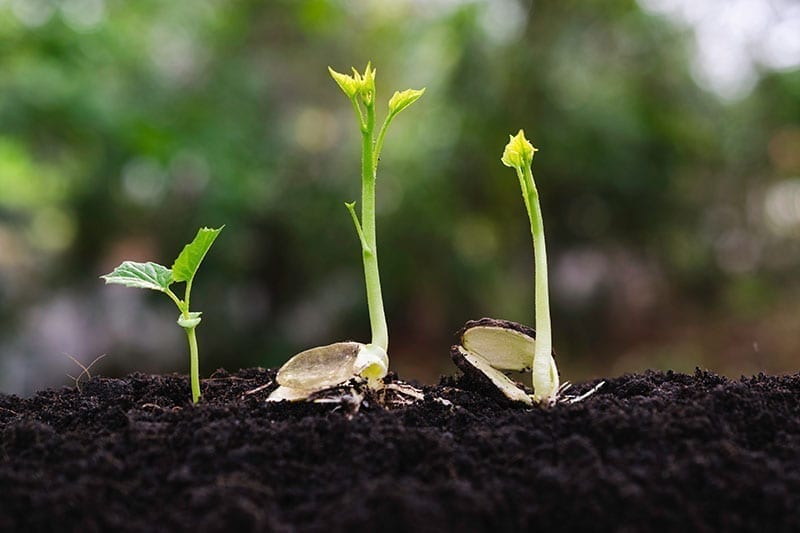
A maize plant sets its maximum yield potential within the first seven days of planting. Likewise, in gardening the first seven days of an annual’s growth are regarded as critical growth periods.
Across the globe, increased attention and interest is being placed on overall health and wellness. Trends have shifted from simply ‘looking’ good to ‘feeling’ good. Being fit, strong and active, both physically and emotionally, is a growing priority for us all. With the rampant spread of diseases such as cancer, the value of health cannot (and is no longer) underestimated. Plant health echoes this conversation.

Healthy strong plants will always be prized over weak, struggling ones. As with human health, continued research and significant developments are continuously being made in plant science. As knowledge of the many growth processes increases, so too does the research and development on tailoring products to maximise each step. So what have we learned and what do we as gardeners need to know about plant health? In nature, plants predominantly need water and sunlight to survive. They are reliant on nutrients within the soil, air and water for nutrition, and grow as best they can within their environment. As such, nutrient-rich soils support enhanced growth when compared to sandy poor soils – hence earlier discussions and emphasis on the importance of soil health. Mankind has been supplementing plant nutrition since the beginning of time. Early Egyptian, Roman and Babylonian records suggest minerals and manure have enhanced farm productivity since ancient times. Gardeners are well aware of the benefits of supplementing nutrition. Some of us are more knowledgeable than others and, as with most things in gardening, everyone experiences success and failure at some stage. As responsible gardeners, it’s important to embrace an integrated, holistic approach to plant health, supplementing nutrition with products that are sustainable and effective, with no negative effects on your soil, your plants and your family.
Macroelements and microelements

Plant nutrition centres around the elements needed by plants to survive. Macroelements are those needed in large amounts and include nitrogen (N), phosphorous (P) and potassium (K), which form the basis of all synthetic granular fertilisers. Microelements are as important as macroelements, but they are only needed by plants in small amounts. They may also be referred to as trace elements. In order for plants to grow to their best potential, they need both macroelements and microelements. It’s important to review your garden’s nutritional recipe, ensuring it provides a balance of both in order to get the best out of your plants. The ‘barrel analogy’ (Liebig’s Law of The Minimum) is a principle developed in agricultural science that visually explains the concept. Liebig’s Law states that, ‘Growth is dictated not by the total resources available, but by its limiting factor or scarcest resource.’ So even if every required nutrient is available to your plants, they won’t be able to grow if they don’t have water (or any single element that is necessary for growth). Ensuring your plants have access to the full nutritional complement will ensure growth is maximised.

The Science behind plant growth
Gardeners who simply feed their plants N, P and K shortcut the natural ‘BioChemical sequence of plant nutrition’. See graphic. In summary, the boron (B), silica (Si) and calcium (Ca) ‘complex’ kickstarts plant growth, allowing N, P, K and the other essential plant nutrients to be absorbed and utilised as needed. What does this mean for us, as gardeners? That plant growth is triggered by the availability of key micronutrients. To maximise growth in your garden, ensure your fertiliser program includes trace elements and B, Si and Ca in particular.
EcoBuz nutrition

The EcoBuz nutrition range has been developed with this science in mind, offering a simple three-step approach to improving plant growth in your garden.
Step 1; HumiGro (the focus of previous features): highlights the importance of soil health and offers a solution to feed your soil.
Step 2 and 3 are liquid fertilisers, StartGro and MultiGro.
StartGro, a blend of organic and inorganic nutrition, targets the early growth stages of plants and is based largely on this biochemical sequence. Its most significant point of differentiation is that it contains no N and P, with only small traces of K. This makes StartGro ideally suited to triggering the growth process. As such, StartGro is recommended for use at planting, be it from seed, seedlings or transplants, and is suitable for shrubs, trees and more.
MultiGro offers an all-in-one vitality solution. This A – Z biostimulant enhances and maximises plant growth, promoting fruiting, flowering and overall plant wellness. MultiGro incorporates an optimal blend of organic and inorganic nutrition, which includes N, P, K plus a full range of micronutrients, added vitamins, kelp, fulvic acid and natural amino acids. MultiGro is ideal for use as a recovery tonic to revitalise stressed and deficient plants. Sustainable gardening is at the core of EcoBuz. We offer superior products tailored to achieve the best possible results with little to no impact on the environment and on our soils.


