
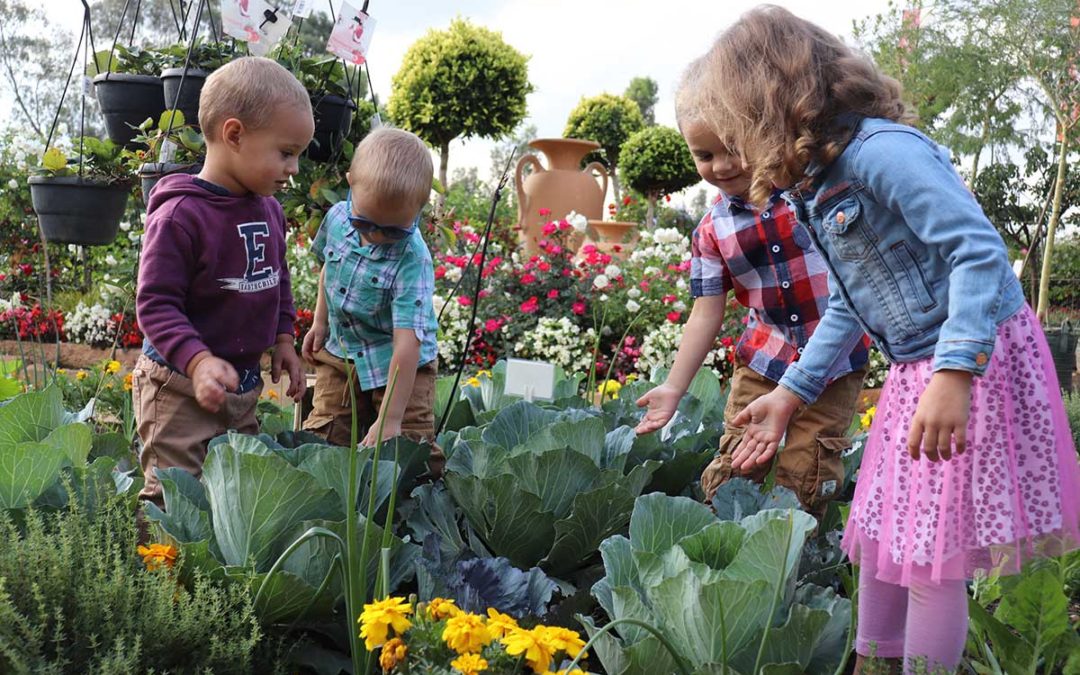
Homegrown Food – Caring For Our Bodies With Plants
The title of this article reminds us of a short children’s book by Lizzy Rockwell. The first few lines of the book say, ‘I am a plant eater. Plants reach out for the sun; they grow in the ground. I eat different parts from different plants, sometimes I eat the leaves, other times the roots, bulbs, stems and flowers too.’ We love this little story because it teaches children, while they are still young, that homegrown food that grows from the ground is nutritious.
We know now that eating is learnt behaviour; children watch us like we did our parents. Let’s go back a million years, to when humans were learning to understand the plants around them.
The history of plant food and homegrown food
According to scienceabc.com, ‘Our early ancestors were far more connected to the earth than most modern humans, and had to have a deep understanding of the plants and ecosystems where they lived. Their learned behaviour came from observing the generations that came before and absorbing that knowledge.’
‘Once humans became largely agricultural-based and narrowed their diets down to staple foods, much of the knowledge of wild plants was lost, or faded, but dietary traditions and regional standards persisted, based on what could best be cultivated in the area. Similarly, during the age of exploration, many legendary explorers and their crews became sick and died, often after eating the native plants. Without the regional knowledge or a local guide, they lacked the ‘learned behaviour’ that would keep them safe in that area.”
Store-bought veggies or homegrown food
Now that we have learnt this eating behaviour from our ancestors, we know which plants are safe to eat and which aren’t. The next step is to speak of growing our own food. A sustainable garden has become very trendy over the past few years, and even some well-known celebrities have shown that following a plant-based diet can be good for your well-being.
Yes, it is easier and more convenient to buy our veggies and fruits from our local stores, but homegrown food produces much tastier food that stays fresher for longer, and can be pesticide and chemical free (if you make an effort to make it so). Growing your own food is organic, healthy and even a solution to health, environmental and economic problems.
So the next time you buy your fresh produce, think of all the fun you could have had enjoying the outdoors and growing your own.
Veggies to plant
Crop pairing
A fabulous veggie gardening trick is to grow compatible plants together. You can think of this as growing your garden in layers, with plants growing upwards, ground dwellers and also climbers. Great pairings include:
- Corn, beans and squashes;
- Tomatoes, basil and onions;
- Leafy lettuce, peas and brassicas (broccoli, cabbage).
Cut-and-regrow vegetables
Some vegetables and herbs regrow after you harvest them, producing new leaves in place of the ones you cut off. These plants include well-known favourites such as beetroot, coriander, kale, mustard, parsley, rocket, basil and spinach.
Rotating planting
This concept involves the rotation of crops in a space, and replanting new seasonal crops. This rotation method helps you to make the same garden space productive all year round, filled with fresh vegetables each season.
Planting and harvesting homegrown food
Since plants are so generous, we could learn from them to give freely by also planting plants that other living creatures can enjoy. If we follow this concept we will help to keep the circle of life going!
For more info and assistance on vegetables and fruits visit Plantland

